Best SAP Ariba Alternatives in 2026
The best alternatives to SAP Ariba in 2026, compared on pricing, features, and fit for your business.
Hylke Reitsma is co-founder of Forthsuite and a supply chain specialist with 8+ years of hands-on experience at Shell, Verisure, and Stryker. He holds an MSc in Supply Chain Management from the University of Groningen and writes practical guides to help e-commerce teams run leaner, faster supply chains. Selected by Replit as 1 of 20 founders for the inaugural Race to Revenue Cohort #1 (2026) and certified as a Replit Platform Builder.
TL;DR: The best SAP Ariba alternatives in 2026 include Coupa, GEP Smart, Jaggaer, Ivalua, and Zycus, each offering distinct strengths in procurement automation, supplier management, and spend analytics. Forthsource helps Shopify operators bypass enterprise procurement software entirely by sourcing suppliers and managing the complete purchase order lifecycle including MOQs, lead times, and factory communications.
Last Updated: 2026-05-16
SAP Ariba is a comprehensive procurement platform designed for enterprise-scale spend management, but its custom enterprise pricing model and focus on Global 2000 companies means it's not the right fit for every organization. Many procurement teams search for alternatives that offer transparent pricing, faster implementation, or specialized capabilities like supplier verification and landed cost intelligence.
Why look for a SAP Ariba alternative?
SAP Ariba serves large enterprises well, but several factors drive teams to consider other options:
- Opaque pricing structure: SAP Ariba pricing is entirely custom and negotiated, with no publicly available pricing. Annual contracts typically include base platform fees, per-user or per-transaction charges, and implementation services costs that can be difficult to forecast during budgeting cycles.
- Enterprise-only focus: Ariba targets Global 2000 companies, making it potentially over-engineered for mid-market organizations or teams that need specific procurement capabilities rather than a full spend management suite.
- SAP ecosystem dependencies: As part of SAP's Intelligent Spend Group, Ariba integrates deeply with SAP S/4HANA and other SAP products, which may not align with organizations using different ERP systems or seeking standalone procurement tools.
Best SAP Ariba alternatives in 2026
1. Forthsource — Supplier verification and procurement intelligence
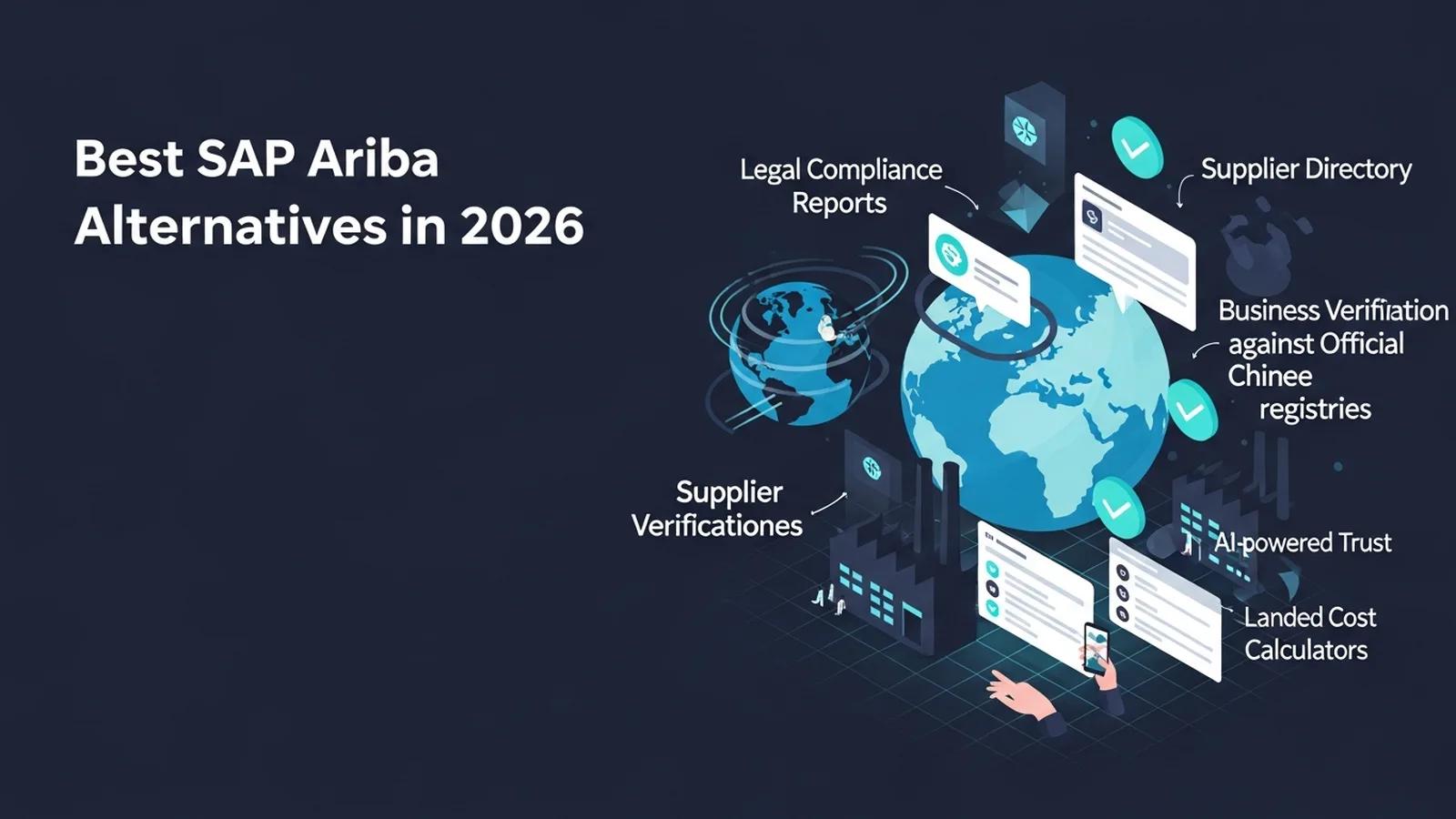
Forthsource specializes in supplier verification and cost intelligence, offering capabilities that complement or replace specific Ariba workflows. The platform provides legal compliance reports, business verification against official Chinese registries, AI-powered supplier trust scores, and a landed cost calculator covering 100+ countries. Unlike Ariba's custom enterprise pricing, Forthsource uses a transparent freemium model: 5 searches per month free, Premium at $29/month, and Enterprise at $99/month. This makes it accessible to procurement teams of any size who need supplier due diligence and cost modeling without enterprise-scale contracts.
Best for: Teams prioritizing supplier verification, landed cost calculation, and procurement intelligence with transparent, predictable pricing.
2. Coupa
Coupa is a cloud-based spend management platform serving mid-market to enterprise organizations. The platform covers procurement, invoicing, expense management, and spend analytics. Coupa competes directly with SAP Ariba in the enterprise procurement space and offers a unified platform approach.
Best for: Mid-to-large enterprises seeking an alternative unified spend management platform.
3. GEP SMART
GEP SMART is an integrated source-to-pay platform that combines procurement, supply chain, and spend management capabilities. The platform targets enterprise buyers and offers modular deployment options across the procurement lifecycle.
Best for: Large organizations wanting modular, configurable procurement solutions.
4. Jaggaer
Jaggaer provides source-to-pay solutions with particular strength in sourcing and supplier management. The platform serves both public sector and commercial enterprises with procurement automation capabilities.
Best for: Organizations with complex sourcing requirements and supplier collaboration needs.
How to choose the right alternative
- Define your specific needs: Determine whether you need a full spend management suite or specialized capabilities like supplier verification, landed cost modeling, or sourcing automation. Many teams over-purchase enterprise platforms when targeted tools would serve them better.
- Evaluate pricing transparency: Consider whether custom enterprise pricing with negotiated contracts fits your budgeting process, or whether transparent, published pricing reduces procurement friction for your finance team.
- Assess implementation complexity: Enterprise platforms like Ariba often require significant implementation resources and integration work. Evaluate whether your team has the capacity for multi-month implementations or needs faster time-to-value.
- Match solution scale to organization size: Platforms built for Global 2000 companies may offer capabilities that mid-market teams won't use. Consider whether your organization's procurement volume and complexity justify enterprise-tier solutions.
Data accuracy note: SAP Ariba pricing and feature information sourced from https://www.sap.com/products/spend-management.html and G2.com. Last verified: 2026-05-16. Verify current pricing at source before making a purchasing decision.
Key Differences Between Ariba Alternatives and When to Switch
SAP Ariba alternatives vary significantly in deployment model, user experience, and target buyer. Understanding these differences helps you avoid migrating to a tool that replicates Ariba's limitations for your specific use case.
Some alternatives, like Coupa and Jaggaer, aim to match Ariba's breadth—offering procurement, invoicing, supplier management, and analytics in one platform. These work well if your team needs comprehensive spend visibility across multiple categories and geographies. Others, like Forthsource, take a specialized approach: they excel at specific workflows (supplier due diligence, landed cost calculation) and integrate with existing systems rather than replacing them entirely. This is often faster to implement and lower-risk for teams that already have reliable ERP or accounting software.
Consider switching if: (1) your current Ariba contract renewal feels prohibitively expensive or your implementation timeline stretches beyond acceptable timelines; (2) your procurement team is smaller than Ariba's typical buyer and you're paying for unused functionality; (3) you need real-time supplier verification or landed cost transparency that Ariba doesn't prioritize; or (4) your tech stack uses non-SAP systems and Ariba's deep ERP integrations don't apply to you.
Implementation and Learning Curve Considerations
Enterprise procurement platforms have notoriously long implementation cycles. Ariba deployments often require months of configuration, data migration, and user training before delivering value. Alternatives differ widely in time-to-value.
Cloud-native platforms like Coupa and Ivalua typically implement faster than Ariba because they're designed for multi-tenant environments with less custom configuration. Smaller, focused tools like Forthsource can be productive within days—your team can start verifying suppliers and calculating landed costs immediately, without waiting for IT infrastructure setup. This matters if you're under pressure to improve supplier risk management or cost visibility quickly.
When evaluating any alternative, ask vendors about: typical implementation timelines for your company size, whether training is self-service or instructor-led, how migration from your current system works, and what ongoing support costs (beyond licensing) you should expect. Many procurement teams underestimate post-launch support, which can significantly impact total cost of ownership.
Integration with Your Existing Tech Stack
SAP Ariba's strength is its deep integration with SAP ERP systems. If you run SAP S/4HANA, Ariba's tight integration can streamline workflows. But if your company uses NetSuite, Sage, or Shopify (as Forthsource's target audience does), you'll be bridging systems anyway, so Ariba's SAP advantage disappears.
Before selecting an alternative, map your current systems: your ERP, accounting software, inventory management tool, supplier database, and any homegrown tools. Ask each alternative vendor: Do you have pre-built connectors for these systems? If not, do you support APIs? What's the typical integration effort? Some platforms offer webhooks and REST APIs that developers can work with; others require expensive professional services integration. Transparent answers here save months of technical debt later.
Frequently Asked Questions About SAP Ariba Alternatives
Is there a free Ariba alternative? No platform perfectly replicates Ariba's full functionality for free, but Forthsource offers a free tier for supplier verification (5 searches monthly), and many alternatives offer trials or freemium models for limited users. If you need only specific Ariba capabilities—like supplier vetting or cost modeling—a focused free tool often beats paying for enterprise licensing you won't use.
Can I migrate my supplier data from Ariba to another platform? Yes, but expect friction. Most platforms support bulk CSV or XML imports. Contact your alternative vendor's migration team before signing; they can advise on data format, cleaning requirements, and timeline. Cleaner data migration is smoother migration.
What if I only need part of Ariba's functionality? This is the strongest argument for alternatives. If procurement team's primary pain points are supplier verification and landed cost visibility, Forthsource alone may deliver more value per dollar than a sprawling enterprise suite. Use the Pareto principle: identify your top 3–5 workflows and find tools that excel there, rather than paying for everything.
Related reading: SAP Ariba Pricing: What It Costs in 2026
About the Author

Hylke Reitsma is co-founder of Forthsuite and a supply chain specialist with 8+ years of hands-on experience at Shell, Verisure, and Stryker. He holds an MSc in Supply Chain Management from the University of Groningen and writes practical guides to help e-commerce teams run leaner, faster supply chains. Selected by Replit as 1 of 20 founders for the inaugural Race to Revenue Cohort #1 (2026) and certified as a Replit Platform Builder.
LinkedIn