Product Sourcing Cost Calculator | Forthsource
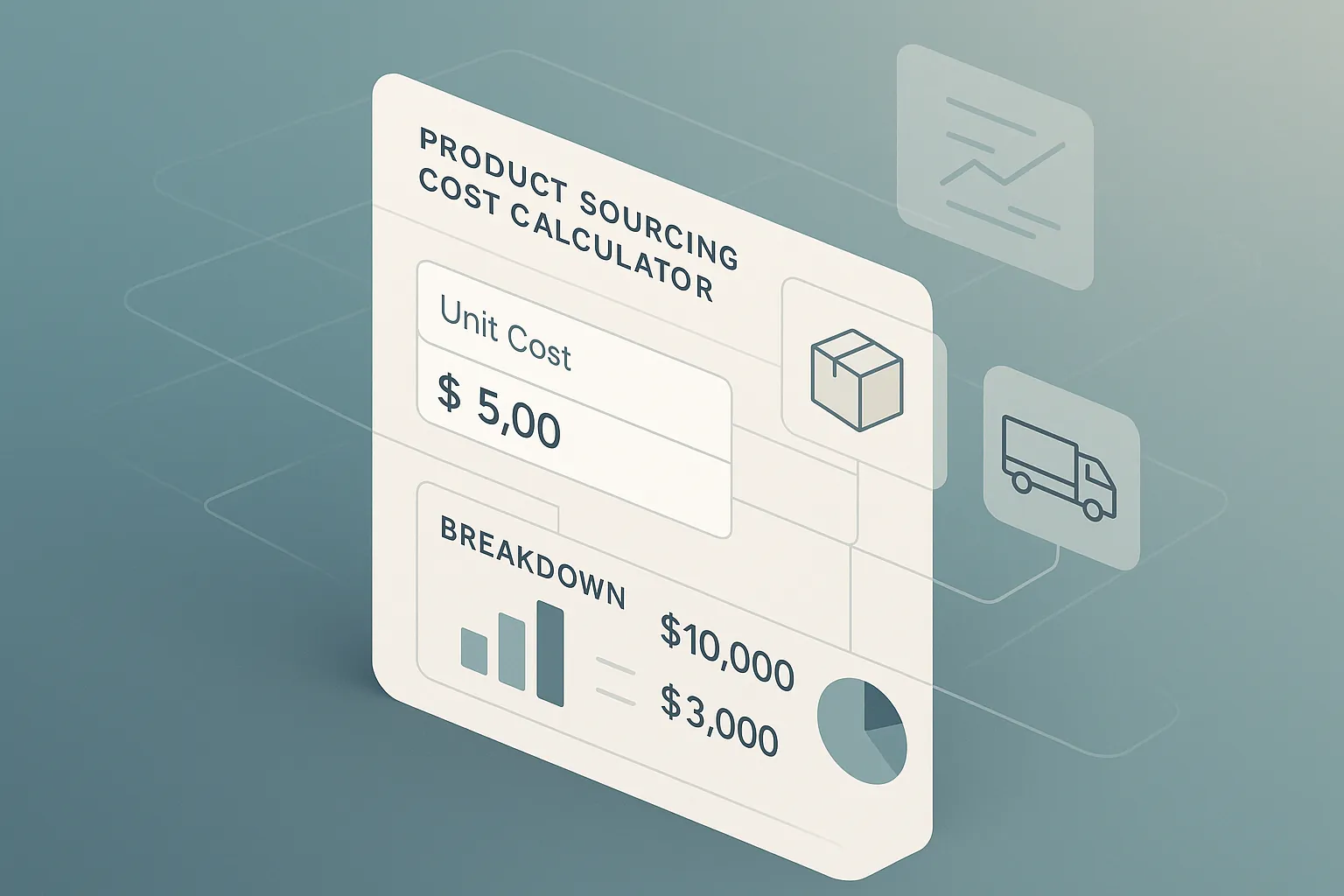
This sourcing cost calculator shows true landed costs instantly: supplier costs, shipping, and duties before you buy.
Hylke Reitsma is co-founder of Forthsuite and a supply chain specialist with 8+ years of hands-on experience at Shell, Verisure, and Stryker. He holds an MSc in Supply Chain Management from the University of Groningen and writes practical guides to help e-commerce teams run leaner, faster supply chains. Selected by Replit as 1 of 20 founders for the inaugural Race to Revenue Cohort #1 (2026) and certified as a Replit Platform Builder.
Product Sourcing Cost Calculator
TL;DR: Running a business means keeping a close eye on expenses, especially when sourcing products from suppliers. Forthsource tracks supplier MOQs, lead times and open PO status in one place for Shopify operators so everyday sourcing decisions stop running on scattered spreadsheets.
Last updated: July 2026
Simplify Your Business with a Product Sourcing Cost Calculator
Running a business means keeping a close eye on expenses, especially when sourcing products from suppliers. Whether you're importing goods for a small online store or scaling up with bulk orders, understanding your total costs is crucial.
That’s where a tool to estimate sourcing expenses comes in handy—it takes the guesswork out of the equation.
Why Cost Breakdowns Matter
When dealing with suppliers, costs can pile up fast. Unit prices are just the start; shipping fees, customs duties, and unexpected extras like storage can eat into your margins.
A reliable calculator helps you see the full picture by breaking down each component. You’ll know exactly what you’re paying per item and where you might trim expenses. For instance, spotting a high shipping rate could push you to negotiate better terms or order in larger quantities.
Make Smarter Decisions
Beyond just crunching numbers, this kind of tool offers insights that shape better choices. Maybe you’ll switch to a local supplier to dodge hefty import fees, or perhaps you’ll adjust order sizes for efficiency.
Whatever your strategy, having clear data empowers you to plan ahead and grow your business without financial hiccups.
FAQs
How accurate is this product sourcing cost calculator?
It’s as accurate as the data you provide. The tool calculates based on your inputs for unit costs, shipping, duties, and other fees, giving you a precise breakdown. For currency conversions, exchange rates fluctuate, so treat any converted figures as estimates and confirm them against a live rate before you commit. Just double-check your numbers, and you’ll get a solid estimate to work with.
Can I use this tool for multiple suppliers or products?
Absolutely! You can run calculations for each supplier or product separately by entering the specific costs each time. It’s a great way to compare deals side by side. Just refresh the inputs for each scenario, and you’ll get a fresh cost summary to help you decide which option makes the most financial sense.
What kind of cost-saving tips does the tool offer?
The tool provides practical suggestions based on your input. For example, if shipping costs are high per unit, it might nudge you to consider bulk ordering to spread out the expense. It’s not just about numbers—it’s about helping you think strategically about sourcing so you can keep more money in your pocket.
Breaking Down Hidden Costs in Your Supply Chain
When you calculate sourcing costs, the obvious line items—unit price, freight, duties—are just the beginning. Many merchants overlook expenses that creep in during the sourcing process and can meaningfully impact your landed cost.
Understanding where these hidden costs hide helps you negotiate better and plan inventory more accurately.
Consider quality inspection fees, which some suppliers charge if you request third-party verification before shipment. Labeling and repackaging costs also add up if your supplier ships in bulk cases but you need individual product boxes. Insurance for goods in transit, especially for fragile or high-value items, is another line that shouldn't be forgotten. Then there are payment processing fees if you're using wire transfers or letters of credit, currency conversion spreads beyond the base exchange rate, and sometimes even demurrage charges if containers sit at ports longer than expected.
A thorough cost calculator should prompt you to account for these secondary expenses so your final landed cost reflects reality, not just what you negotiated with the supplier.
Comparing Supplier Scenarios with Side-by-Side Analysis
One of the most practical ways to use a sourcing cost calculator is running multiple supplier comparisons simultaneously. Rather than toggling between spreadsheets or mental math, you can input each supplier's terms and see the total cost picture for each option laid out clearly.
Start by listing the key variables: unit cost, minimum order quantity, lead time in days, freight method and cost, duties or tariffs applicable to that supplier's country, and any additional fees unique to that supplier. Once you plug in these figures for two or three potential suppliers, the differences become obvious—and sometimes surprising. A supplier with a lower unit price might have shipping costs that erase that advantage, or their MOQ might force you to over-order, tying up cash in inventory.
This side-by-side view also helps you spot negotiation opportunities. If one supplier's terms are nearly competitive but fall short in one category, you have concrete data to bring back to them. "Your unit price is solid, but your freight cost is 20 percent higher than Supplier B—can we work on that?" is far more effective than vague haggling.
What Happens When You Underestimate Sourcing Costs?
Merchants who skip detailed cost calculations often find themselves in a squeeze. You might price products competitively based on a rough estimate, only to discover once orders arrive that your actual margin is much smaller than expected.
This can force tough choices: absorb the loss on those products, raise prices mid-season (which can hurt sales), or scale back future orders until margins improve.
Beyond the immediate margin hit, underestimating costs can distort your inventory decisions. You might order more aggressively because you think you have room in the budget, only to realize cash flow is tighter than planned. Or you might avoid reordering a bestseller because you miscalculated how much capital you'd have left.
A calculator that forces you to be thorough eliminates this guesswork. By accounting for all cost components upfront, you enter into supplier negotiations and inventory planning with confidence in your numbers.
Using Cost Data to Negotiate Better Terms
Once you've calculated your true sourcing costs, you have leverage in negotiations. Rather than asking for a price reduction in a vacuum, you can point to specific cost drivers and propose solutions.
Maybe bulk ordering would lower unit costs enough to offset your carrying costs. Or perhaps splitting shipments into two smaller orders would reduce demurrage risk and actually lower your all-in expense.
Suppliers respect merchants who understand their own economics. When you arrive at a negotiation table with a detailed breakdown, you come across as professional and informed—qualities that often lead to better long-term partnerships and more flexible terms.
About the Author

Hylke Reitsma is co-founder of Forthsuite and a supply chain specialist with 8+ years of hands-on experience at Shell, Verisure, and Stryker. He holds an MSc in Supply Chain Management from the University of Groningen and writes practical guides to help e-commerce teams run leaner, faster supply chains. Selected by Replit as 1 of 20 founders for the inaugural Race to Revenue Cohort #1 (2026) and certified as a Replit Platform Builder.
LinkedIn