What Is Site Sourcing?
Site sourcing evaluates a supplier's physical location — factory, warehouse, or facility — before you commit to an order. Learn the process, red flags, and…
Hylke Reitsma is co-founder of Forthsuite and a supply chain specialist with 8+ years of hands-on experience at Shell, Verisure, and Stryker. He holds an MSc in Supply Chain Management from the University of Groningen and writes practical guides to help e-commerce teams run leaner, faster supply chains. Selected by Replit as 1 of 20 founders for the inaugural Race to Revenue Cohort #1 (2026) and certified as a Replit Platform Builder.
Last updated: July 2026
What Is Site Sourcing?
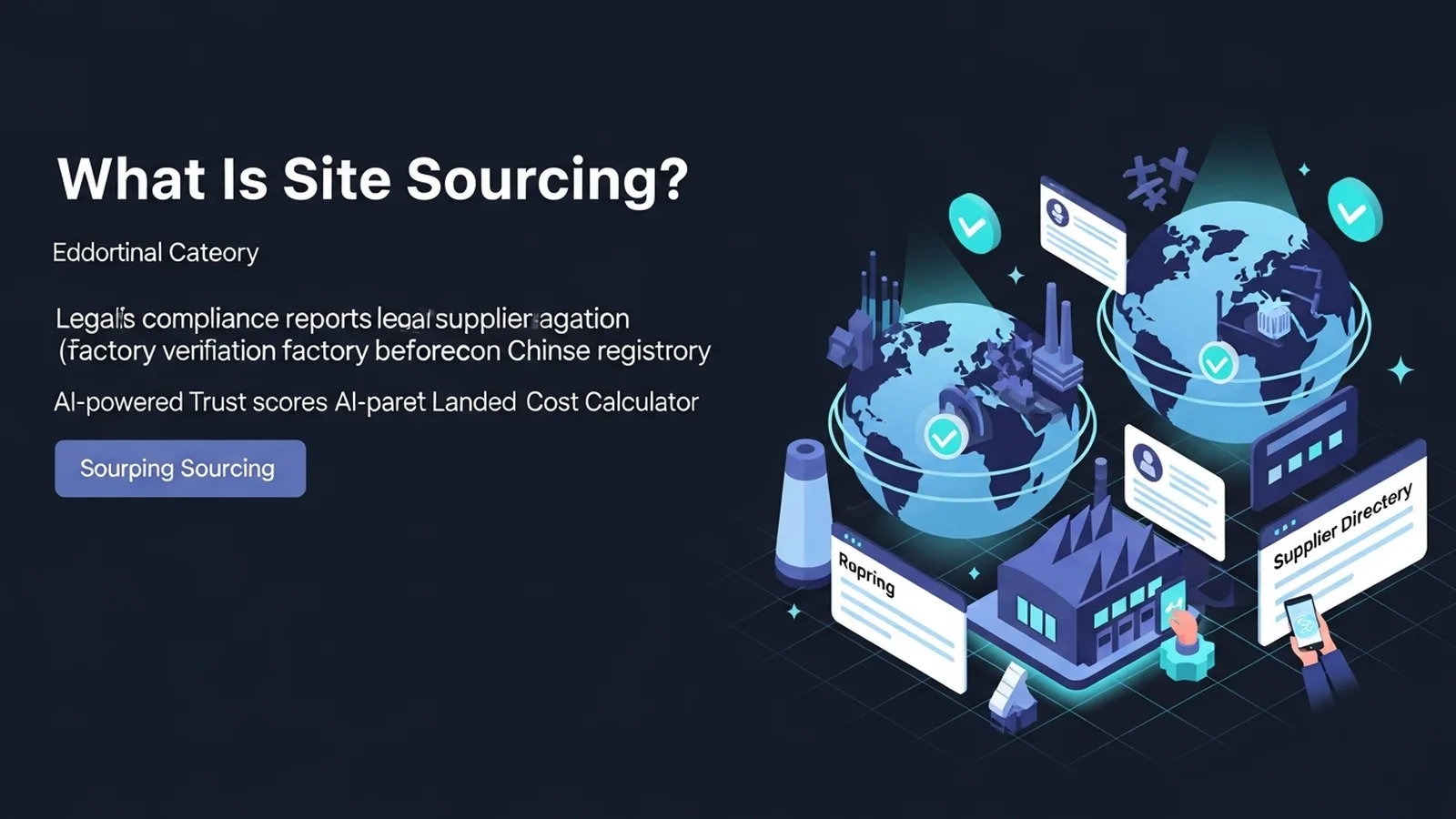
Site sourcing is a supplier due-diligence step where you evaluate the physical location — factory, warehouse, or production site — of a potential supplier before placing your first purchase order. Rather than trusting only catalogue photos or trade-show claims, site sourcing verifies that the facility is real, operational, and capable of fulfilling your requirements.
The term is commonly used in global supply chain management, particularly when sourcing from overseas manufacturers in China, Vietnam, India, or Bangladesh.
Why Site Sourcing Matters
- Prevents fraud: Trading companies sometimes pose as manufacturers. Site sourcing exposes this quickly.
- Confirms capacity: A supplier may claim they can produce 10,000 units/month but only have equipment for 2,000.
- Checks compliance: Facility audits reveal labour practices, environmental compliance, and safety standards.
- Reduces defect risk: Brands that conduct site sourcing report fewer quality defects on first orders.
Site Sourcing vs Product Sourcing
Product sourcing is the broad process of finding and selecting suppliers for a specific product. Site sourcing is a focused sub-step within that process — it evaluates the supplier's physical facility rather than just the product itself.
| Dimension | Product Sourcing | Site Sourcing |
|---|---|---|
| Scope | Finding the right supplier for a product | Verifying the supplier's physical location |
| Stage | Early (search and shortlist) | Later (before PO commitment) |
| Method | Alibaba, trade shows, referrals | Audits, inspections, Forthsource company-record dossier |
| Output | Shortlist of candidate suppliers | Pass/fail on a specific supplier |
How to Do Site Sourcing Without Visiting the Factory
Most brands — especially early-stage ones — cannot afford to fly to China or Vietnam for every supplier. Remote site sourcing uses:
- Third-party inspection companies (SGS, Bureau Veritas, QIMA) who conduct physical audits on your behalf for $200–$500.
- Supplier verification platforms like Forthsource, whose one-time manual dossier reads a Chinese supplier's official company report and adds separate OpenSanctions screening.
- Video factory tours requested directly from the supplier (look for unedited, live-streamed walkthroughs).
- Reference checks with other buyers who have used the same facility.
What to Look for During a Site Source Check
- Production capacity vs. claimed monthly output
- Equipment age and condition
- Quality management systems (ISO 9001, SA8000)
- Workforce size and skill level
- Raw material storage and traceability
- Environmental and labour compliance certificates
Common Red Flags
- Showroom-only visit — no production floor access
- Refusal to share business registration documents
- Third-party audit reports that cannot be independently verified
- Factory address that matches a residential building or small office
How a Forthsource Dossier Supports Site Sourcing
Forthsource covers the desktop portion of site sourcing with a separately ordered manual dossier. A reviewer works from the supplier's official Chinese company report (a Qichacha source document) and records company status, legal representative, capital, ownership, litigation, dishonest-debtor, abnormal-operations and tax-status flags from that report, plus separate OpenSanctions screening.
It is delivered with a Verified, Caution or High-Risk verdict and a stated 24-to-48-hour target. It works from the company report and the sanctions screening, does not produce a score, and does not verify capacity — the physical checks above remain yours.
Common Mistakes Brands Make During Site Sourcing
Even when you commit to verifying a supplier's facility, several pitfalls can undermine the process. Understanding these mistakes helps you conduct more effective due diligence.
The first mistake is relying solely on supplier-provided photos or videos. Factory tours arranged by the supplier themselves are often carefully curated — you may see only the cleanest, most modern production line while missing outdated equipment in other sections. Always request unscheduled or third-party-conducted inspections when possible. A supplier willing to accommodate a surprise audit is usually a safer bet than one requiring advance notice.
A second common error is failing to verify capacity claims against actual trade history. A supplier might claim they export 500,000 units annually, but customs records may show only 50,000 units shipped in the past year. This gap suggests either dishonesty or severe operational problems. Cross-referencing claimed capacity with export volume is one of the most revealing steps in site sourcing.
Many brands also overlook the importance of checking multiple certifications independently. ISO 9001 certificates can be forged or outdated. Always contact the certifying body directly or use an automated verification platform to confirm that a certificate is current and legitimate. Similarly, ask for references from at least three current customers — not just one — and actually contact them.
Finally, avoid the trap of outsourcing site sourcing entirely without maintaining your own oversight. While third-party auditors and verification tools save time and money, they should complement rather than replace your own diligence. At minimum, speak directly with the supplier, ask detailed questions about their operations, and review any red flags before committing to a large order.
Site Sourcing for Different Product Categories
The focus areas of a site sourcing audit vary depending on what you're manufacturing. Apparel brands should prioritize labour compliance, sewing equipment condition, and fabric storage practices.
Electronics suppliers require different scrutiny — verify testing equipment, cleanroom standards, and component traceability. Food and beverage suppliers need documentation of food safety certifications and cold-chain infrastructure.
For example, if you're sourcing kitchenware, you'll want to see commercial-grade metal fabrication equipment and quality testing for material safety. If you're sourcing electronics accessories, inspect for soldering equipment, electrostatic discharge protection, and component-level testing. A site sourcing checklist that works for textiles won't catch critical gaps in electronics manufacturing.
Customize your inspection focus to your product's specific risks — safety hazards, contamination potential, precision tolerances, or material authenticity. This targeted approach makes your site sourcing more efficient and more likely to catch real problems.
What Should You Do If a Supplier Fails a Site Sourcing Check?
Finding red flags during a site sourcing audit doesn't automatically mean you abandon the supplier. Your response depends on the severity and nature of the issue.
Minor issues — such as slightly outdated equipment or incomplete documentation that can be easily updated — may warrant a conversation. Give the supplier an opportunity to explain or remediate. Many legitimate operations have administrative gaps or are mid-upgrade.
However, critical failures such as evidence of fraudulent credentials, unsafe labour practices, or capacity that's a fraction of claimed output should be automatic deal-breakers. No cost savings are worth the legal, reputational, or operational risks these represent.
For moderate concerns — perhaps the facility is smaller than claimed but genuine — request a smaller pilot order first. This lets you validate their actual quality and reliability before scaling up. This staged approach reduces your risk while still allowing you to work with a promising but less-proven supplier.
Document all findings and keep records of your due diligence. If product issues arise later, this documentation demonstrates that you took reasonable steps to vet the supplier.
Related reading: China vs Vietnam Sourcing Costs 2026
Frequently Asked Questions
What is site sourcing?
Site sourcing is the process of evaluating a supplier's physical location — factory, warehouse, or production facility — before committing to an order. It verifies that the supplier has the real capacity, equipment, and quality controls they claim, reducing fraud and defect risk.
What is the difference between site sourcing and product sourcing?
Product sourcing is the broad process of finding and selecting suppliers for a specific product. Site sourcing is a focused sub-step within that process — it evaluates the supplier's physical facility rather than the product itself. You can source a product without doing site sourcing, but site sourcing gives you much higher confidence in the supplier's real capabilities.
How do I do site sourcing without visiting the factory?
Remote site sourcing uses: (1) third-party inspection companies like SGS, Bureau Veritas, or QIMA who conduct physical audits for $200–$500; (2) supplier verification platforms like Forthsource, whose one-time dossier reads the supplier's official Chinese company report (status, ownership and litigation flags) plus separate OpenSanctions screening; (3) live video factory tours requested directly from the supplier; and (4) reference checks with other buyers who have used the same facility.
What are the red flags to look for during site sourcing?
Key red flags include: showroom-only visits with no production floor access, refusal to share business registration documents, third-party audit reports that cannot be independently verified, and a factory address that matches a residential building or small office rather than a manufacturing facility.
Is site sourcing only for large brands?
No. Site sourcing is valuable at any order size. Small brands (under 500 units) can use desktop verification tools and request video tours. Mid-size brands (500–5,000 units) benefit from paid third-party audit reports. Larger brands conduct on-site audits for every new supplier and annual audits for ongoing partners.
What is Site Sourcing?
Site sourcing is a supplier due-diligence step where you evaluate the physical location — factory, warehouse, or production site — of a potential supplier before placing your first purchase order. Forthsource offers supplier search across sourcing platforms and a separately ordered, one-time manual Chinese supplier dossier for merchants who import product.
About the Author

Hylke Reitsma is co-founder of Forthsuite and a supply chain specialist with 8+ years of hands-on experience at Shell, Verisure, and Stryker. He holds an MSc in Supply Chain Management from the University of Groningen and writes practical guides to help e-commerce teams run leaner, faster supply chains. Selected by Replit as 1 of 20 founders for the inaugural Race to Revenue Cohort #1 (2026) and certified as a Replit Platform Builder.
LinkedIn